Commercial Roof Coating or New Roof? How to Decide for Your Facility
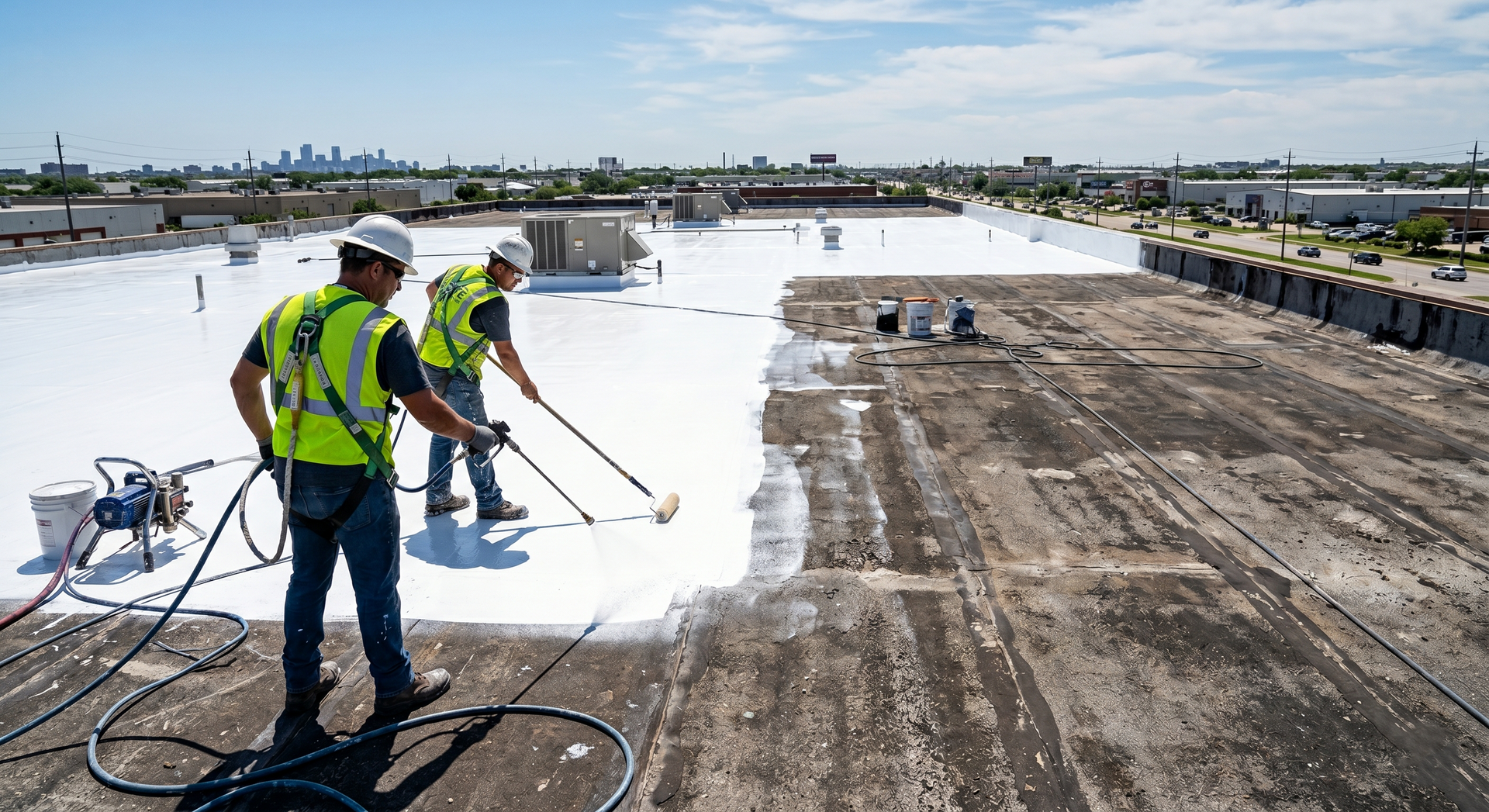
If your commercial roof is aging or starting to leak, you’re likely facing a major decision: apply a roof coating or invest in a full roof replacement.
This choice can significantly impact your budget, your building’s performance, and your long-term maintenance costs.
Here’s the straightforward answer:
If your existing roof is still structurally sound, a commercial roof coating can often restore performance at a fraction of the cost of replacement. However, if the roof has major structural damage or widespread failure, replacement may be unavoidable.
In this guide, we’ll break down the differences, costs, benefits, and key decision factors so you can confidently choose the best solution for your facility.
What Is a Commercial Roof Coating?
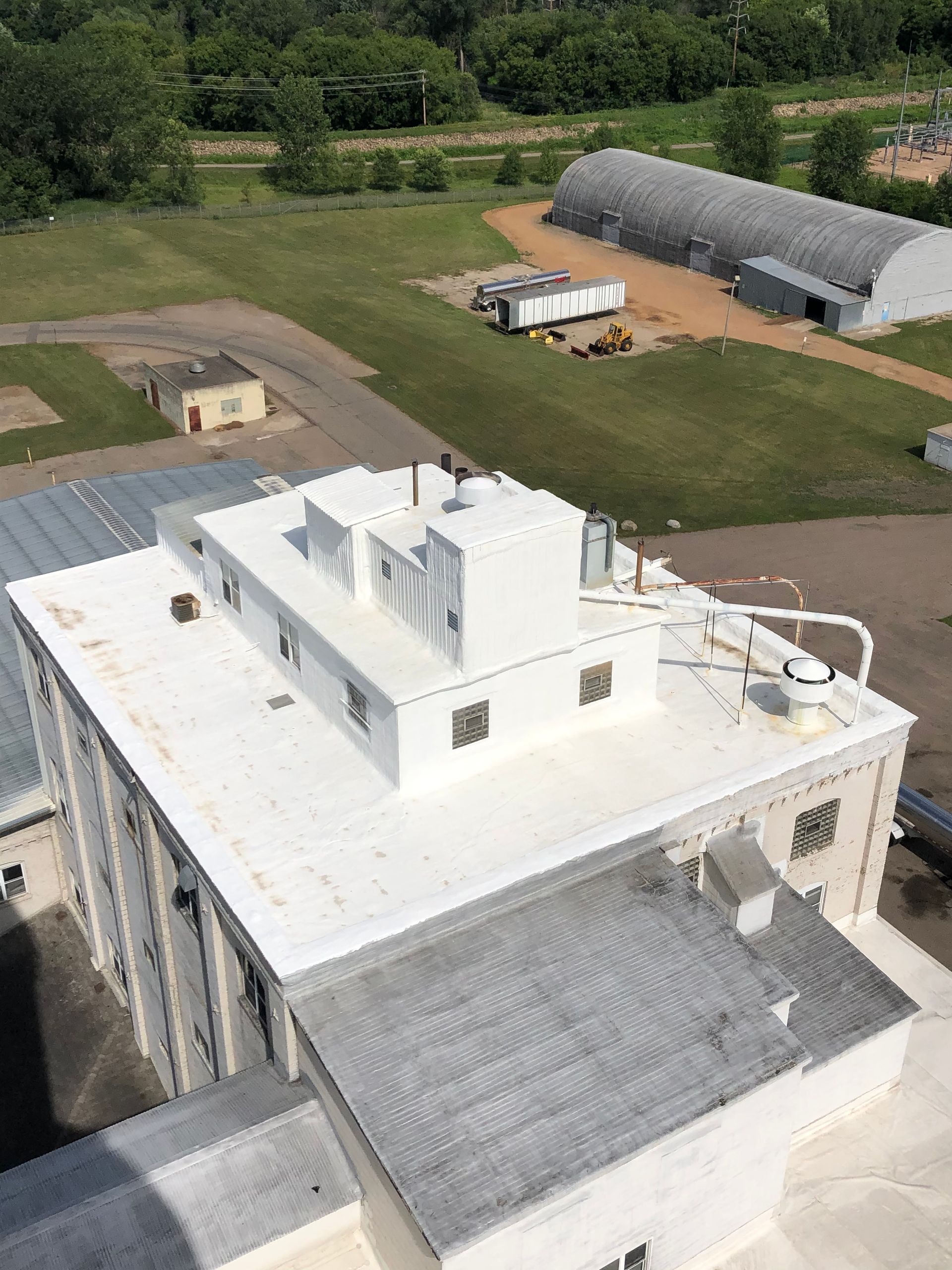
A roof coating is a fluid-applied system that is installed directly over an existing roof. Once cured, it forms a seamless, waterproof membrane that protects and extends the life of the roof.
Common coating types include:
- Silicone coatings
- Acrylic coatings
- Polyurethane coatings
These systems are often used as part of a roof restoration strategy, especially for flat or low-slope commercial roofs.
What Is a Full Roof Replacement?
A roof replacement involves removing the existing roof system entirely and installing a brand-new one.
This process typically includes:
- Tear-off of old materials
- Disposal and cleanup
- Repairs to the roof deck
- Installation of a new roofing system (TPO, EPDM, metal, etc.)
While replacement gives you a fresh start, it also comes with higher costs and more disruption.
Cost Comparison: Coating vs Replacement
Roof Coating
- Lower upfront investment
- No tear-off costs
- Reduced labor requirements
- Minimal disposal fees
In many cases, coatings can cost 50–70% less than a full replacement.
Roof Replacement
- High material and labor costs
- Tear-off and disposal expenses
- Potential structural repairs
Replacement is typically the most expensive option, but sometimes necessary.
Installation Time and Disruption
Roof Coating
- Faster installation (often days)
- Minimal disruption to operations
- No exposure of interior spaces
Roof Replacement
- Longer timelines (weeks in many cases)
- Increased noise and debris
- Potential exposure during the tear-off
For occupied buildings, this difference can be critical.
Lifespan and Performance
Roof Coatings
- Extend roof life by 10–20 years
- Can be reapplied (recoated)
- Protect against UV and weather damage
Roof Replacement
- New system lifespan of 15–30 years
- Eventually requires another full replacement
One key advantage of coatings is that they allow you to maintain rather than replace your roof over time.
Energy Efficiency Benefits
Roof coatings—especially reflective coatings—can significantly improve energy efficiency.
Benefits include:
- Reduced heat absorption
- Lower cooling costs
- Improved indoor comfort
This is particularly valuable for commercial buildings with large roof surfaces.
When a Roof Coating Is the Best Choice
A coating system is ideal when:
- The roof is structurally sound
- Damage is limited or localized
- You want to extend the roof's life
- You want to reduce costs
- You want minimal disruption
Many commercial roofs in Minnesota qualify for this type of restoration.
When You Need a Full Roof Replacement
Replacement is necessary when:
- The roof deck is compromised
- There is extensive water damage
- Multiple systems have failed
- The structure is unsafe
In these cases, coatings may not provide a reliable long-term solution.
Types of Roofs That Work Well with Coatings
Roof coatings can be applied to many systems:
- Metal roofs
- Single-ply membranes (TPO, EPDM, PVC)
- Modified bitumen
- Built-up roofing
This flexibility makes coatings a practical option for many commercial buildings.
Minnesota Climate Considerations
Minnesota’s weather creates unique challenges:
- Snow and ice accumulation
- Freeze-thaw cycles
- UV exposure during summer
Roof coatings help by:
- Creating a waterproof barrier
- Reflecting sunlight
- Protecting against temperature extremes
This makes them a strong option for extending roof life in this region.
Environmental Benefits
Roof coatings are also a more sustainable choice:
- Reduce landfill waste (no tear-off)
- Lower energy consumption
- Extend the existing roof lifespan
For companies focused on sustainability, coatings can support environmental goals.
Key Decision Factors
When deciding between coating and replacement, consider:
1. Roof Condition
Is the structure sound, or is there major damage?
2. Budget
Are you looking to minimize upfront costs?
3. Timeline
Do you need a fast solution?
4. Long-Term Plans
Are you planning to hold the building long-term?
5. Energy Efficiency Goals
Do you want to reduce operating costs?
Frequently Asked Questions
How long do roof coatings last?
Most coatings last 10–20 years and can be reapplied to extend lifespan.
Are coatings waterproof?
Yes, they create a seamless, waterproof membrane.
Can coatings fix leaks?
Yes, coatings can seal leaks and prevent new ones.
Is a coating cheaper than replacement?
Yes, coatings are typically much more affordable.
Can all roofs be coated?
No—only roofs in good structural condition are suitable.
Call to Action
If you’re unsure whether your roof needs a coating or full replacement, a professional inspection is the best place to start.
Kohls Foam Systems, Inc. has been helping commercial property owners make cost-effective roofing decisions since 1987.
Call (612) 708-4111 or visit:
[Kohls Foam Systems – https://kohlsfoamsystems.com/]
Serving Eden Prairie, Minneapolis, and across Minnesota, as well as Colorado, Florida, Hawaii, and Illinois.
recent posts