When Is the Best Time of Year for Commercial Roof Restoration in Minnesota?
For most Minnesota commercial properties, the best time to plan roof restoration is during the warmer, drier portion of the year, when weather conditions are more favorable for inspection, preparation, repairs, and application. However, building owners should start evaluating their roofs well before they want the work completed. Waiting until late fall can reduce scheduling flexibility and leave little time to address unexpected problems before winter.
For building owners in Plymouth, Maple Grove, and Brooklyn Park, planning ahead can make commercial roof restoration easier to budget, schedule, and complete. The right timing depends on the existing roofing system, restoration materials, roof condition, weather, and the scope of work required.
Why Timing Matters for Commercial Roof Restoration
Commercial roof restoration is not simply a matter of applying a coating over an aging roof.
A successful project may involve inspection, cleaning, repairs, moisture evaluation, seam or penetration work, surface preparation, and installation of the restoration system itself.
Many roofing products also have specific temperature, moisture, and weather requirements for proper application. Rain, excessive moisture, cold temperatures, or rapidly changing weather can interfere with certain stages of a project.
Minnesota's relatively short warm-weather construction season makes advance planning especially valuable.
Building owners who begin the process early have more time to understand the condition of the roof, evaluate options, obtain a proposal, budget for the project, and schedule work during an appropriate weather window.
Spring Is an Important Evaluation Period
Spring is one of the most useful times to inspect a commercial roof in Minnesota.
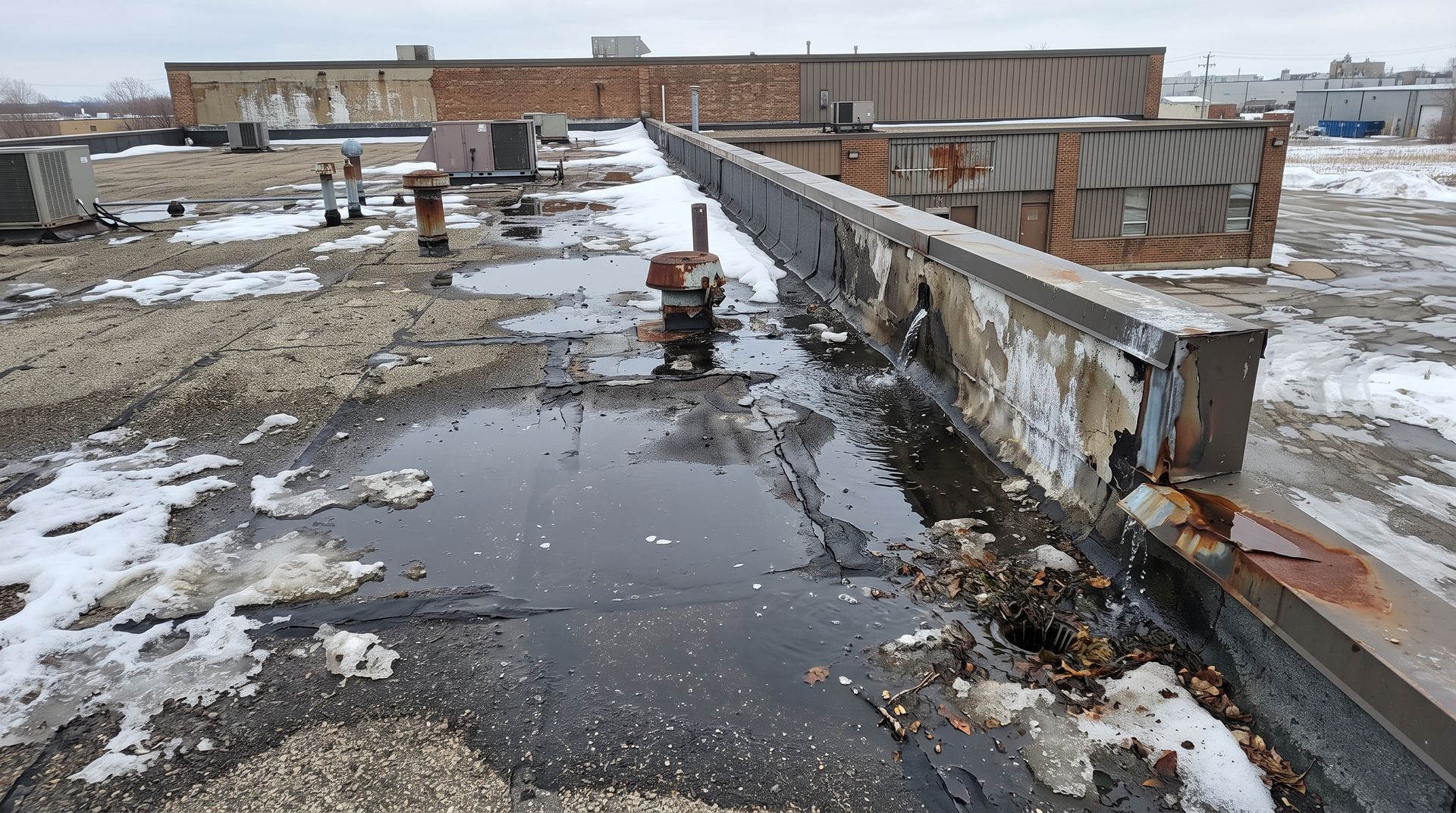
Once snow and ice have cleared, building owners can see how the roof performed during winter. Problems that developed or became worse during cold weather may become more apparent during snowmelt and spring rain.
An inspection may identify issues such as damaged seams, deteriorated flashing, worn coatings, drainage problems, punctures, loose materials, or evidence of water intrusion.
Spring does not necessarily mean restoration work must begin immediately. Instead, it can be the ideal time to gather information.
For a commercial property in Plymouth, for example, an early inspection can give the owner several months to plan repairs or restoration instead of discovering a serious problem shortly before winter returns.
Late Spring Can Offer Favorable Conditions
As temperatures become more consistent and the roof has had time to dry, late spring can provide opportunities for commercial roof restoration.
The exact timing depends on weather conditions and the materials being installed.
Surface preparation is particularly important. The existing roof generally needs to be properly cleaned and prepared before a restoration system is applied. Damaged areas may also need repair.
If moisture is present within portions of the roof assembly, those conditions may need to be addressed before restoration proceeds.
Starting the evaluation process earlier in spring allows time for these issues to be discovered and corrected.
Summer Is a Major Commercial Roofing Season
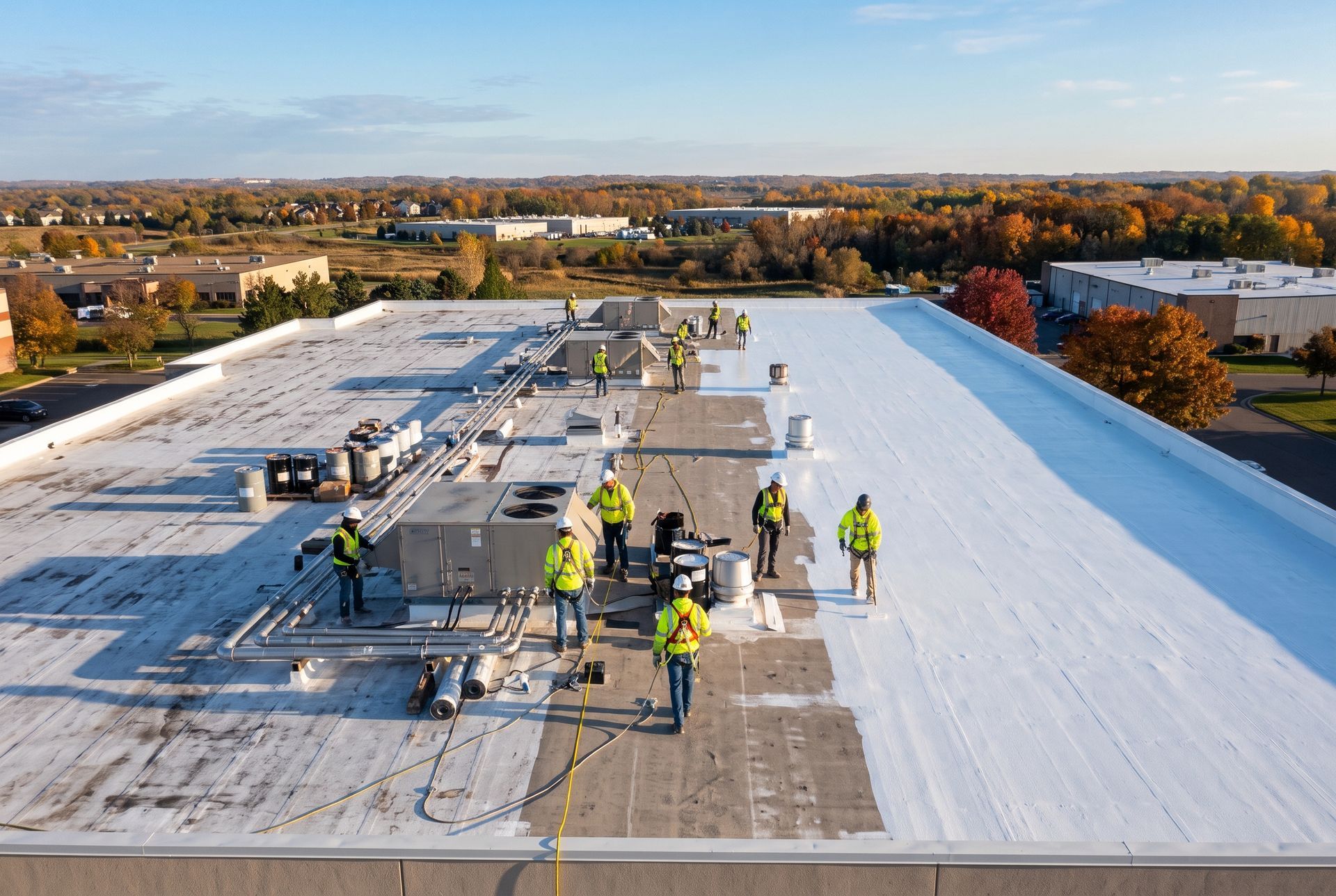
Summer provides longer days and generally more favorable temperatures for many commercial roofing projects in Minnesota.
For that reason, it can be a busy season for contractors.
Building owners considering summer restoration should avoid assuming they can wait until June or July to begin calling contractors. Starting the conversation earlier can provide greater flexibility when choosing a project window.
Summer also creates its own considerations. Very hot roof surfaces, storms, humidity, and changing weather can affect project planning.
Professional contractors monitor conditions and follow the application requirements for the specific materials being used.
For businesses in Maple Grove, scheduling a roof evaluation in spring can make it easier to determine whether summer restoration is appropriate and what preparation will be required.
Early Fall Can Be an Opportunity, but Planning Is Critical
Early fall can also provide workable conditions for certain commercial roof restoration projects.
For owners who discover problems during summer, this may create an opportunity to address the roof before another Minnesota winter.
However, the margin for delays becomes smaller as the season progresses.
A project that encounters unexpected repairs, prolonged rain, colder temperatures, or material-specific application limitations may become more difficult to complete as winter approaches.
That is why building owners should not treat fall as the time to begin thinking about a roof that has shown problems all year.
Ideally, the roof has already been evaluated and the project is ready to move forward when an appropriate weather window becomes available.
Why Waiting Until Late Fall Can Be Risky
Late fall is not the ideal time to discover that a commercial roof needs substantial restoration.
Minnesota temperatures can change quickly. Shorter daylight hours, precipitation, frost, and colder surfaces can complicate roofing work.
Some products require minimum temperatures or appropriate surface conditions during application and curing. Those requirements vary by system and manufacturer.
Even when certain work remains possible, owners may have fewer scheduling options.
Waiting also increases the possibility that unresolved leaks or deterioration will remain through another winter.
A better strategy is to identify potential problems earlier and determine whether immediate repairs, restoration, or future replacement should be planned.
What About Emergency Roof Problems During Winter?
Roof problems do not follow a convenient construction calendar.
If a commercial building begins leaking during winter, the owner should not simply wait for spring without taking action.
The immediate priority is to evaluate the problem, protect the building, and determine what corrective work is feasible under the conditions.
Temporary or localized repairs may sometimes be needed until more comprehensive work can be completed in favorable weather.
Winter problems can also provide valuable information for future restoration planning. The location and circumstances of leaks should be documented so those areas can receive close attention during a later roof evaluation.
For commercial properties in Brooklyn Park and surrounding communities, keeping records of winter roof issues can help contractors understand patterns when the roof becomes fully accessible.
How Far in Advance Should You Plan a Roof Restoration?
Commercial building owners should think in terms of months rather than days.
The process begins with understanding the existing roof.
An inspection may reveal that the roof is a straightforward restoration candidate. It may also uncover wet insulation, damaged materials, drainage issues, or other conditions that need to be addressed first.
Larger commercial buildings can require additional planning because of their size, rooftop equipment, tenant operations, access requirements, and project logistics.
Starting early gives owners time to make informed decisions instead of choosing a solution under emergency conditions.
Does the Age of the Roof Determine When to Restore It?
Roof age is useful information, but it should not be the only factor.
Two roofing systems installed in the same year can have very different conditions based on installation quality, maintenance, drainage, exposure, building use, storm damage, and previous repairs.
A roof does not necessarily need replacement simply because it reaches a particular age.
At the same time, waiting until an aging roof has widespread deterioration can reduce restoration options.
The best time to explore restoration is often before the roof reaches the point of extensive failure.
That allows a contractor to determine whether the existing system can still serve as a suitable foundation for restoration.
Why Proactive Restoration Can Be Better Than Emergency Replacement
Emergency roofing decisions are rarely ideal for a commercial property owner.
A serious leak can disrupt operations, damage inventory or interior finishes, affect tenants, and create pressure to find a solution immediately.
Proactive planning provides more control.
An owner can evaluate the roof, compare appropriate solutions, coordinate work around business operations, and include the project in a maintenance or capital budget.
If restoration is appropriate, it may also allow the owner to preserve portions of the existing roofing system rather than automatically proceeding with a complete tear-off.
Whether that is possible depends on the actual roof condition.
What Happens Before a Commercial Roof Is Restored?
The process typically begins with an evaluation of the existing roofing system.
The contractor needs to understand what type of roof is present, its condition, where problems are occurring, and whether restoration is appropriate.
Preparation can then vary based on the system.
The roof may require cleaning, repairs, treatment of seams and penetrations, removal of damaged material, correction of localized moisture problems, or other work before the restoration system is installed.
This preparation is one reason building owners should avoid selecting a project date before the roof has been properly evaluated.
The condition of the roof helps determine the scope and schedule.
Frequently Asked Questions
What is the best month for commercial roof restoration in Minnesota?
There is no single best month for every project. Warmer and drier periods generally provide more opportunities, but actual conditions, roof type, restoration materials, and manufacturer requirements determine when work should occur.
Should I have my commercial roof inspected in spring?
Spring is an excellent time to evaluate a Minnesota commercial roof after winter. An inspection can identify deterioration, drainage issues, leaks, or other conditions that should be addressed during the warmer months.
Can commercial roof restoration be done in fall?
Some projects can be completed during suitable fall conditions. However, waiting until late fall reduces flexibility because colder temperatures, frost, precipitation, and shorter weather windows can affect scheduling and application.
Should I restore my roof before it starts leaking?
Potentially. Restoration is often worth evaluating while an existing roof remains in serviceable condition. Waiting for widespread failure may limit the available options.
How do I know if my commercial roof can be restored?
A professional roof evaluation is the best starting point. The contractor can assess the existing system, surface condition, moisture concerns, previous repairs, and other factors to determine whether restoration is appropriate.
Plan Your Minnesota Commercial Roof Restoration Early
The best time to think about commercial roof restoration is before an aging roof becomes an emergency.
For property owners and facility managers in Plymouth, Maple Grove, Brooklyn Park, and nearby Twin Cities communities, spring evaluation followed by warm-season planning can provide more flexibility and help prepare the building before another Minnesota winter.
Kohls Foam Systems, Inc. has provided roofing and insulation solutions since 1987, including commercial roof restoration, spray foam roofing, metal roof restoration, and single-ply restoration.
If your commercial roof is aging, leaking, or showing signs of deterioration, call Kohls Foam Systems at (612) 708-4111 to discuss the condition of your roof and determine the appropriate next step.
recent posts