Spray Foam Roofing vs Roof Replacement: Which Is Better for a Commercial Building?
Compare spray foam roofing vs full replacement for commercial buildings

If you’re managing or owning a commercial building, one of the most expensive decisions you’ll face is whether to restore your existing roof or replace it entirely. The difference between choosing spray foam roofing and a full roof replacement can easily impact your budget by tens—or even hundreds—of thousands of dollars.
Here’s the short answer:
If your existing roof is structurally sound, spray foam roofing is often the more cost-effective, energy-efficient, and less disruptive option. However, if your roof has severe structural damage or saturation, replacement may be necessary.
This guide breaks down everything you need to know so you can make the right decision for your building, your budget, and your long-term goals.
Understanding Spray Foam Roofing (SPF Systems)
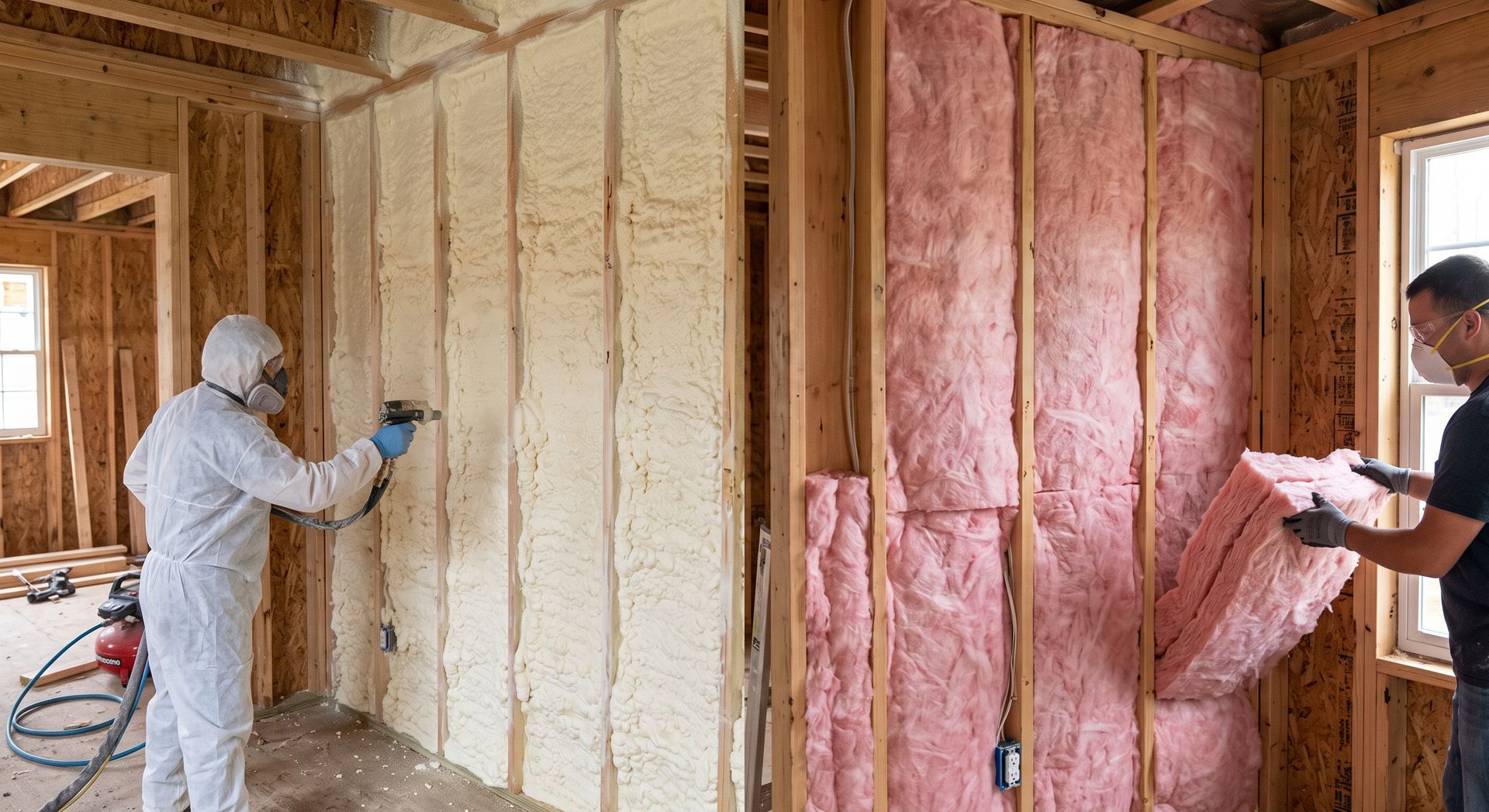
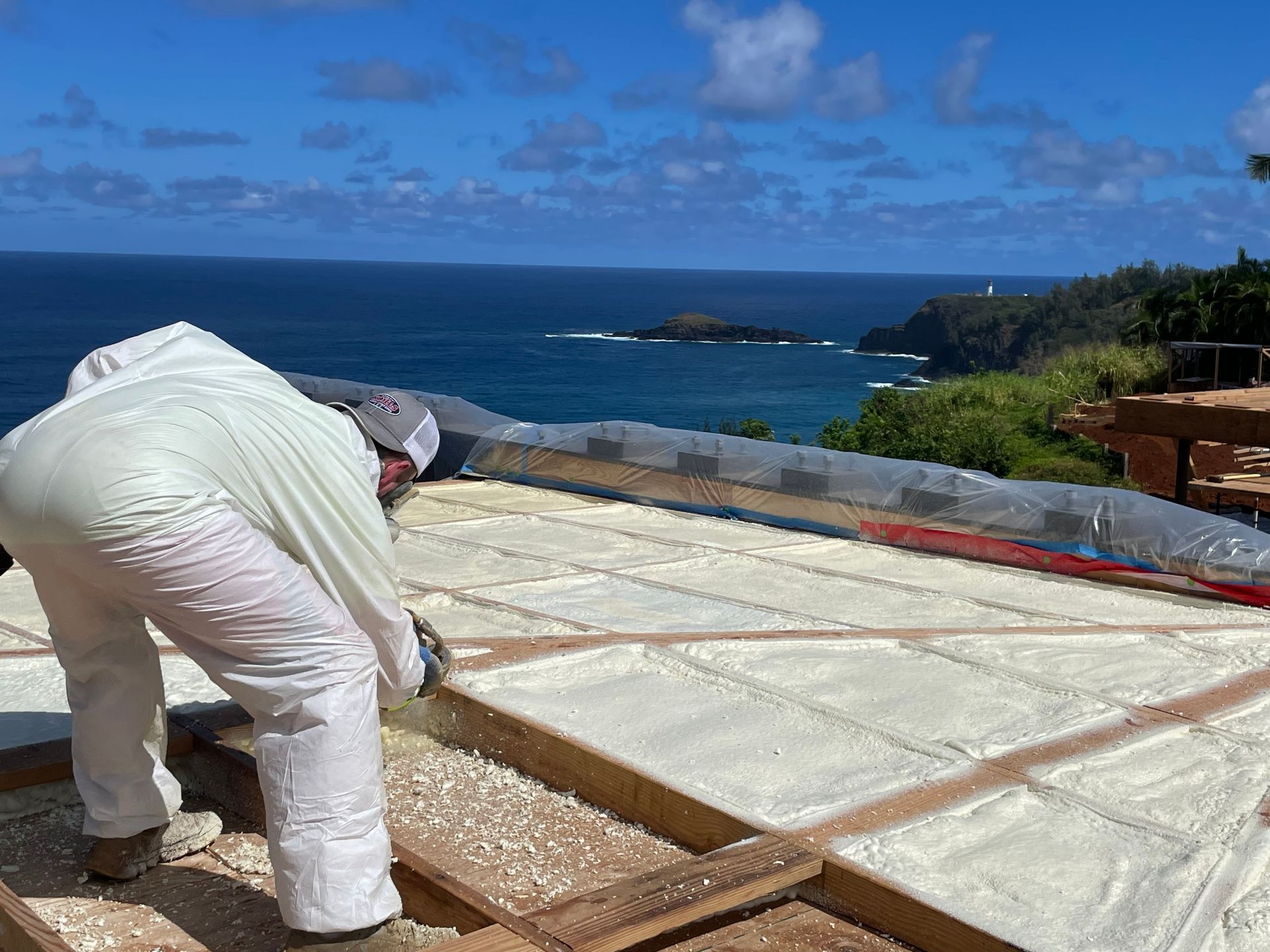
Spray polyurethane foam (SPF) roofing is a fluid-applied system that is sprayed directly onto an existing roof. Once applied, it expands into a solid, seamless layer that adheres to the surface and creates a fully waterproof barrier.
On top of the foam, a protective coating—usually silicone—is added to protect against UV rays, weather, and wear.
What makes spray foam unique?
- Seamless application: No joints, seams, or fasteners where leaks typically occur
- Fully adhered system: Bonds directly to the roof surface
- Built-in insulation: Adds significant R-value
- Custom fit: Expands to fill cracks, gaps, and uneven surfaces
Unlike traditional systems, spray foam doesn’t just cover your roof—it improves its performance.
What Happens During a Full Roof Replacement?
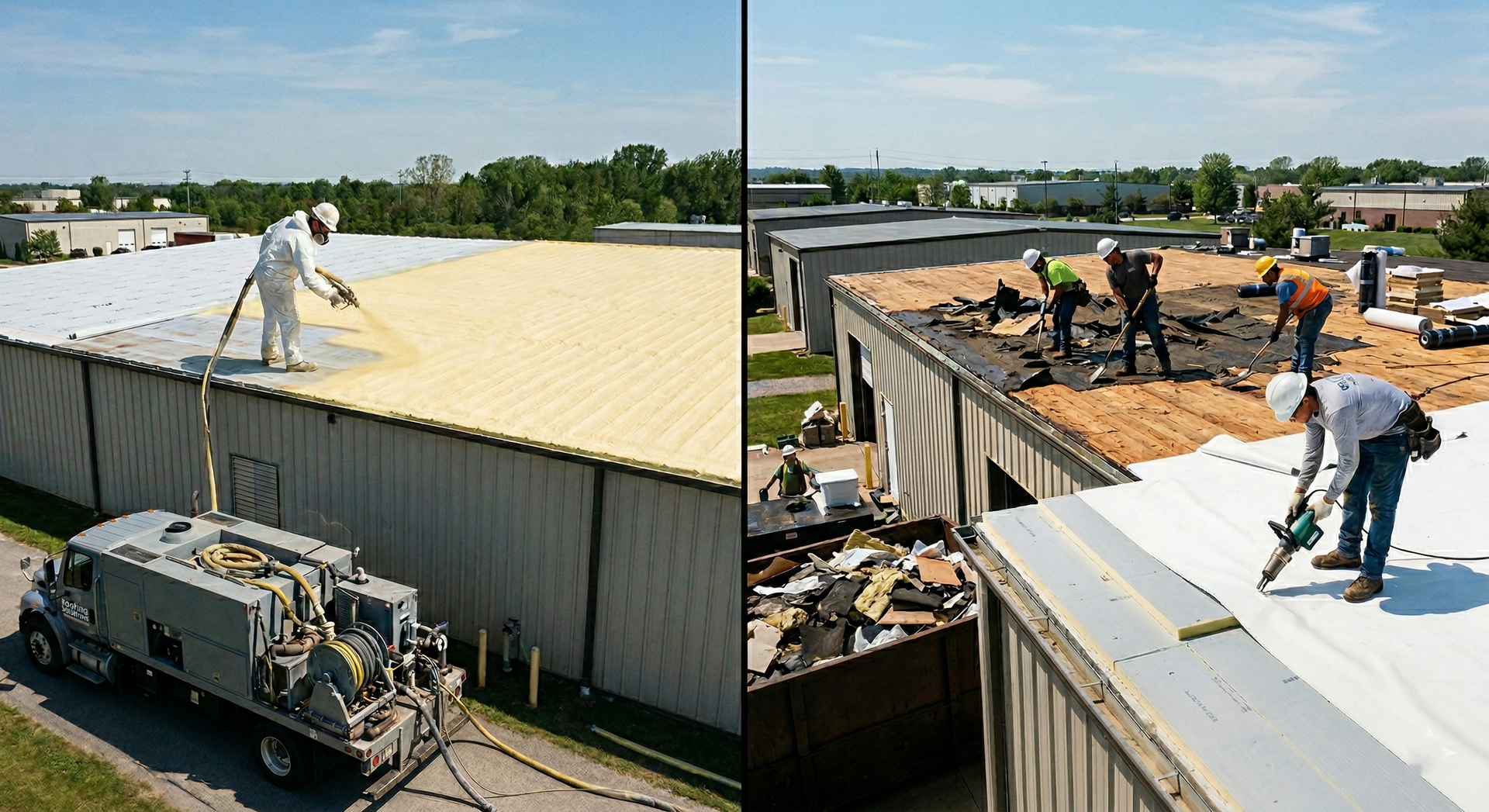
A full roof replacement involves removing the entire existing roofing system down to the deck and installing a new one. This may include:
- Removing old membranes, insulation, and flashing
- Repairing or replacing damaged decking
- Installing a new roofing system (TPO, EPDM, metal, etc.)
While this provides a completely new system, it also comes with significant drawbacks in terms of cost, time, and disruption.
Cost Breakdown: Spray Foam vs Roof Replacement
For most building owners, cost is the biggest factor.
Spray Foam Roofing Costs
Spray foam roofing is typically significantly less expensive because:
- No tear-off is required
- Less labor is involved
- No landfill or disposal costs
- Faster installation reduces labor hours
Additionally, future maintenance is more affordable because the roof can be recoated instead of replaced.
Roof Replacement Costs
A full replacement includes:
- Demolition and disposal
- Labor-intensive installation
- Higher material costs
- Potential structural repairs
In many cases, replacement costs can be 2–3 times higher than restoration.
Installation Timeline and Business Impact
Spray Foam Roofing
- Quick installation (often days instead of weeks)
- Minimal disruption to tenants or operations
- No exposure to the interior during installation
Because the system is applied over the existing roof, your building remains protected throughout the process.
Roof Replacement
- Longer timelines
- Increased noise and debris
- Potential exposure to weather during tear-off
- Greater disruption to operations
For occupied commercial buildings, this can be a major concern.
Energy Efficiency: A Major Long-Term Advantage
One of the biggest advantages of spray foam roofing is its ability to reduce energy costs immediately.
Why SPF improves energy performance:
- High R-value insulation
- Eliminates air leaks
- Reflective coatings reduce heat absorption
In climates like Minnesota, where winters are long and heating costs are high, this added insulation can lead to substantial savings over time.
Many building owners see reductions in energy usage of 10–30% after installation.
Lifespan and Long-Term Value
Spray Foam Roofing
- 20–30+ year lifespan
- Recoat every 10–15 years
- Minimal tear-off required over time
The key advantage here is sustainability—you’re not replacing the roof again, just maintaining it.
Roof Replacement
- Lifespan varies (15–30 years, depending on the system)
- Eventually requires another full replacement
- Seams and fasteners can degrade over time
Over the decades, replacement systems often cost more due to repeated tear-offs.
Leak Resistance and Waterproofing
Water intrusion is one of the most common and costly problems in commercial roofing.
Spray Foam Roofing
- Seamless surface eliminates leak points
- Expands to seal cracks and penetrations
- Fully adhered—no water migration underneath
Traditional Roof Systems
- Seams, fasteners, and penetrations create vulnerabilities
- Leaks can travel beneath the membrane before detection
This makes spray foam especially effective for buildings that have experienced recurring leaks.
When Spray Foam Roofing Is the Best Choice
Spray foam is ideal if:
- Your roof is still structurally sound
- You want to avoid high replacement costs
- You’re dealing with recurring leaks
- You want to improve energy efficiency
- Your building has a flat or low-slope roof
- You need a fast, low-disruption solution
This applies to many commercial buildings throughout Minnesota and other service areas.
When Roof Replacement Is the Better Option
Despite its advantages, spray foam isn’t always the right choice.
Replacement is necessary when:
- The roof deck is damaged or rotting
- There is severe water saturation
- Multiple roofing systems have failed
- Structural integrity is compromised
A professional inspection is the only way to determine this accurately.
Minnesota Climate Considerations
Commercial roofs in Minnesota face unique challenges:
- Heavy snow loads
- Freeze-thaw cycles
- Ice dam formation
- Extreme temperature swings
Spray foam performs well in these conditions because:
- It eliminates seams where water can enter
- It provides continuous insulation
- It reduces thermal movement
For many property owners in Eden Prairie, Minneapolis, and surrounding areas, this makes SPF a highly practical solution.
Environmental and Sustainability Benefits
Spray foam roofing is also a more sustainable option:
- Reduces landfill waste (no tear-off)
- Improves energy efficiency
- Extends the life of existing roofing systems
For companies focused on sustainability or ESG goals, this can be a major advantage.
Frequently Asked Questions
Is spray foam roofing always cheaper than replacement?
In most cases, yes. However, if your roof has structural damage, replacement may be required.
How long does installation take?
Spray foam roofing can often be completed in a few days, while replacements can take weeks.
Can spray foam be applied over a metal roof?
Yes, spray foam is commonly applied over metal roofs and is an excellent restoration solution.
How often does spray foam need maintenance?
Recoating is typically needed every 10–15 years to maintain performance.
Will spray foam roofing stop leaks?
Yes. Its seamless design eliminates the most common sources of leaks.
Call to Action
If you’re unsure whether your building needs a full replacement or if restoration is possible, the smartest first step is a professional evaluation.
Kohls Foam Systems, Inc. has been serving commercial property owners since 1987 with proven, cost-effective roofing solutions.
Call (612) 708-4111 today or visit:
[Kohls Foam Systems – https://kohlsfoamsystems.com/]
Serving Eden Prairie, Minneapolis, and across Minnesota, as well as Colorado, Florida, Hawaii, and Illinois.