What Is Spray Foam Roofing and How Does It Work on Low-Slope Buildings?
Spray foam roofing—also known as SPF (spray polyurethane foam)—is one of the most efficient and cost-effective roofing systems available for commercial buildings with flat or low-slope roofs. It’s not just a protective layer; it’s a fully integrated roofing system that provides insulation, waterproofing, and durability in a single application.
Here’s the simple explanation:
Spray foam roofing is applied as a liquid that expands into a seamless, insulated, waterproof barrier directly over your existing roof.
For building owners looking to avoid expensive tear-offs, reduce energy costs, and extend roof life, SPF roofing has become an increasingly popular solution—especially in climates like Minnesota.
What Is Spray Foam Roofing?
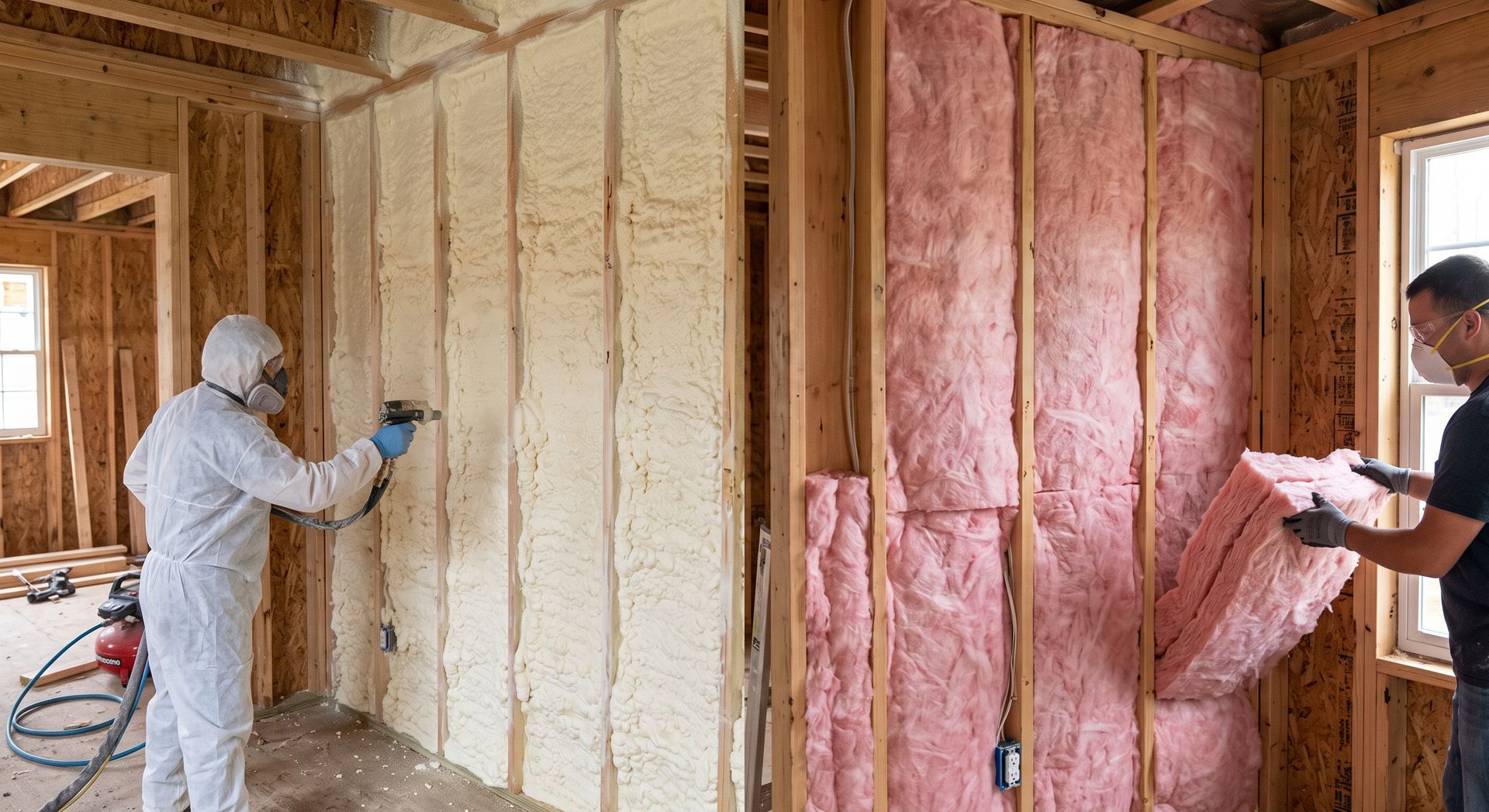
Spray foam roofing is made from a two-component mixture (isocyanate and polyol resin) that is sprayed onto a prepared roof surface. When these components combine, they react and expand into a rigid foam.
This foam forms a continuous, seamless layer across the entire roof.
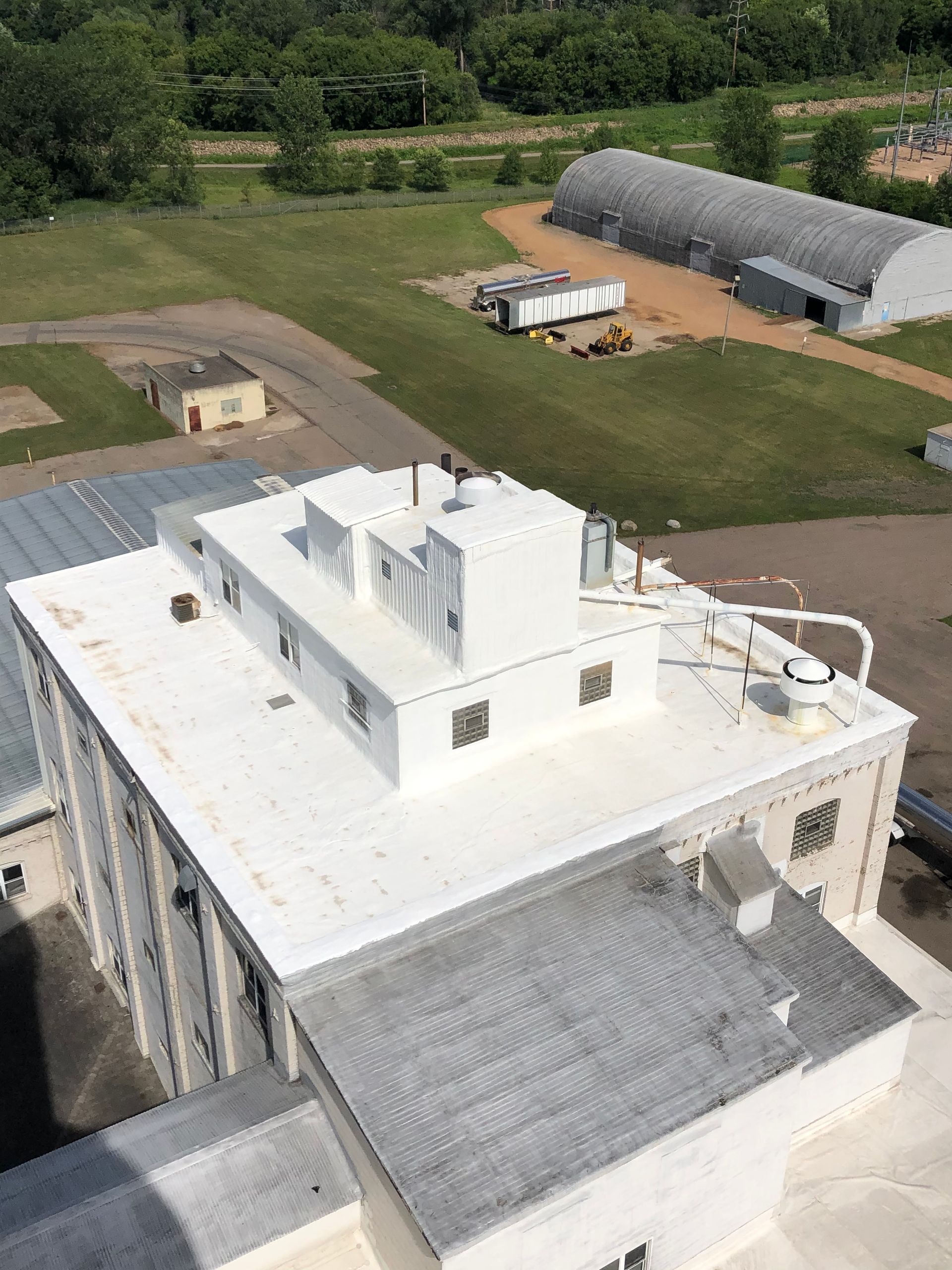
Once the foam is applied, it is covered with a protective coating—usually silicone—to shield it from UV rays, weather exposure, and physical wear.
How Spray Foam Roofing Works (Step-by-Step)
Understanding the installation process helps explain why this system is so effective.
1. Roof Inspection and Preparation
Before application, the existing roof is thoroughly inspected to ensure it is structurally sound. Any necessary repairs—such as fixing damaged areas or addressing moisture—are completed.
The roof is then cleaned to remove debris, dirt, and contaminants.
2. Spray Foam Application
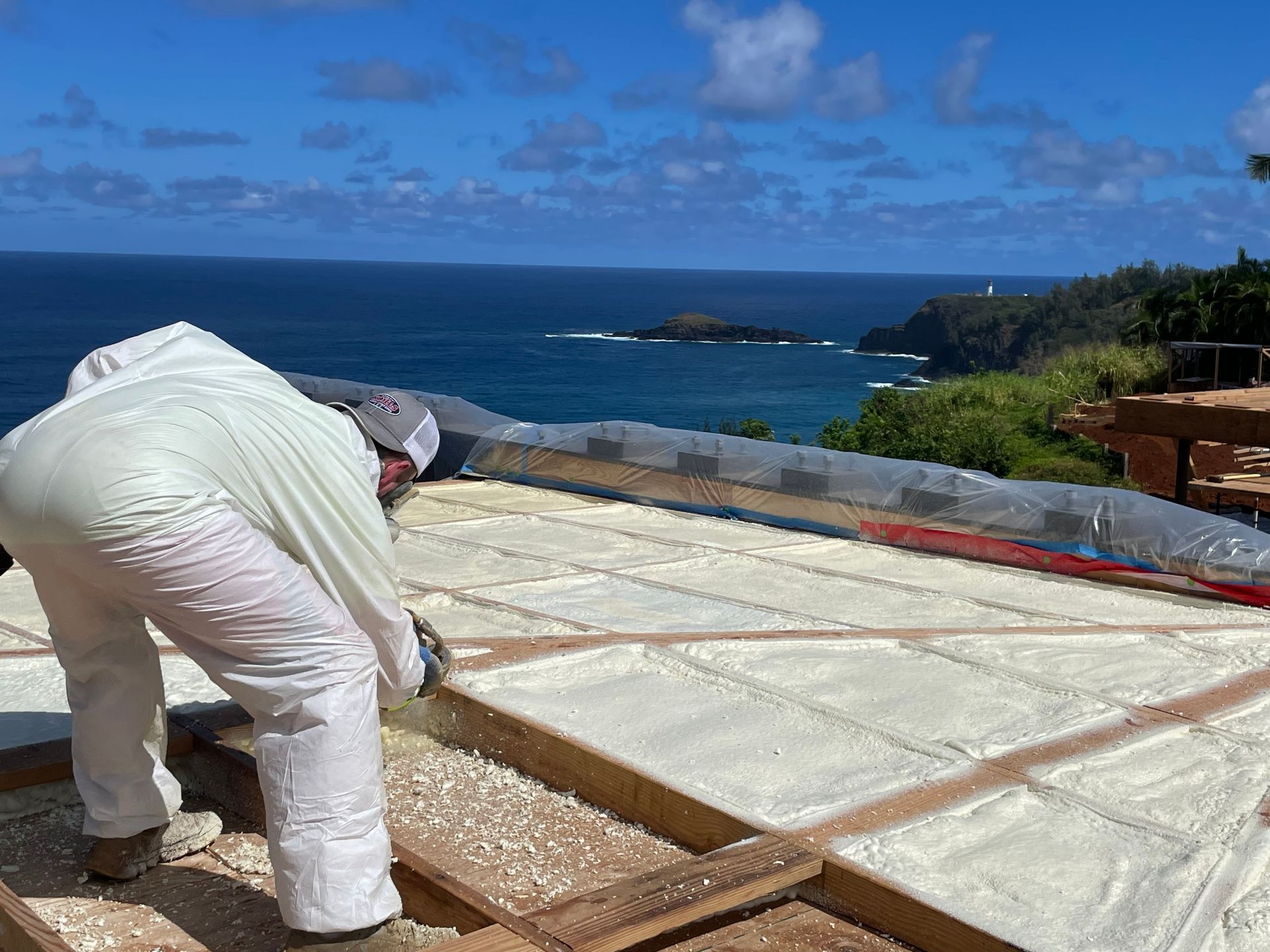
The liquid foam is sprayed evenly across the roof surface. As it is applied:
- It expands rapidly (up to 30–60 times its original size)
- Fills cracks, seams, and gaps
- Creates a fully adhered layer
This expansion allows the foam to conform to irregular surfaces, making it ideal for older roofs.
3. Shaping and Slope Correction
One unique advantage of spray foam is that it can be shaped during installation.
Contractors can:
- Improve drainage
- Eliminate ponding water
- Create proper slope where none existed
This is a major benefit over traditional systems that simply follow the existing structure.
4. Protective Coating Application
After the foam cures, a protective coating is applied.
This coating:
- Shields against UV rays
- Adds weather resistance
- Enhances durability
- Reflects sunlight to reduce heat absorption
Silicone coatings are commonly used because they perform well in extreme weather conditions.
Why Spray Foam Roofing Is Ideal for Low-Slope Roofs
Low-slope and flat roofs are more prone to:
- Water pooling
- Seam failures
- Leak development
- Drainage issues
Traditional roofing systems rely on seams and fasteners, which are common failure points.
Spray foam roofing eliminates these vulnerabilities by creating a seamless, fully adhered surface.
Key Benefits of Spray Foam Roofing
1. Seamless Waterproof Protection
Because there are no seams or joints, there are fewer opportunities for water intrusion.
This is especially important for commercial buildings where leaks can disrupt operations and damage assets.
2. Superior Insulation
Spray foam has a high R-value, meaning it provides excellent thermal resistance.
Benefits include:
- Lower heating and cooling costs
- Improved indoor comfort
- Reduced strain on HVAC systems
In colder regions like Minnesota, this insulation can significantly reduce winter energy expenses.
3. Cost-Effective Installation
Since SPF can be applied over existing roofs, it eliminates:
- Tear-off costs
- Disposal fees
- Excess labor
This makes it one of the most cost-effective commercial roofing options available.
4. Lightweight System
Spray foam is extremely lightweight compared to traditional roofing materials.
This reduces stress on the building structure and makes it suitable for a wide range of properties.
5. Long Lifespan with Maintenance
A properly installed spray foam roof can last 20–30 years or more.
Instead of replacing the roof, it can be:
- Inspected regularly
- Recoated every 10–15 years
This extends its life without major capital expenses.
6. Improved Drainage
Because SPF can be shaped during installation, it helps eliminate ponding water—a major cause of roof failure.
Common Applications for Spray Foam Roofing
Spray foam roofing is widely used on:
- Warehouses
- Office buildings
- Retail centers
- Industrial facilities
- Schools and municipal buildings
It is especially effective for buildings with flat or low-slope roofs that experience recurring issues.
How Spray Foam Compares to Other Roofing Systems
Spray Foam vs TPO/EPDM
- SPF: Seamless, insulated, fully adhered
- TPO/EPDM: Seamed systems with potential leak points
Spray Foam vs Metal Roofing
- SPF: Can restore existing metal roofs
- Metal: Requires full installation and higher upfront cost
Spray Foam vs Built-Up Roofing (BUR)
- SPF: Lightweight and energy-efficient
- BUR: Heavier, more labor-intensive, and less insulated
Climate Performance: Why SPF Works in Minnesota
Minnesota’s climate presents several roofing challenges:
- Heavy snow loads
- Freeze-thaw cycles
- Extreme temperature swings
Spray foam roofing performs well because:
- It eliminates seams where water can freeze and expand
- Provides continuous insulation
- Reduces thermal movement
This makes it particularly effective for buildings in Eden Prairie, Minneapolis, and surrounding areas.
Maintenance Requirements
Spray foam roofing is relatively low-maintenance but still requires:
- Annual inspections
- Periodic cleaning
- Recoating every 10–15 years
Regular maintenance ensures maximum lifespan and performance.
When Spray Foam Roofing May Not Be Suitable
Although SPF is highly versatile, it may not be ideal if:
- The roof structure is severely damaged
- There is extensive moisture trapped in the system
- The substrate cannot support adhesion
In these cases, a replacement may be necessary.
Frequently Asked Questions
How thick is spray foam roofing?
Typically, spray foam is applied at a thickness of 1–2 inches, depending on the building’s needs.
Is spray foam roofing waterproof?
Yes. Its seamless design creates a fully waterproof barrier.
How long does installation take?
Most projects can be completed in a few days, depending on size and conditions.
Can spray foam be applied over an existing roof?
Yes, as long as the existing roof is structurally sound.
Does spray foam roofing require maintenance?
Yes, but it is minimal compared to traditional systems.
Call to Action
If you’re considering spray foam roofing for your commercial building, the next step is a professional evaluation.
Kohl's Foam Systems, Inc. has been installing high-performance spray foam systems since 1987, helping building owners reduce costs and extend roof life.
Call (612) 708-4111 or visit:
[Kohl's Foam Systems – https://kohlsfoamsystems.com/]
Serving Eden Prairie, Minneapolis, and across Minnesota, as well as Colorado, Florida, Hawaii, and Illinois.
recent posts